Sleep Technology Buyer's Guide: What the Science Actually Supports
An honest evaluation of every sleep technology category — sunrise alarms, white noise machines, cooling mattresses, diffusers, and multi-modality systems — through the lens of the actual mechanisms.

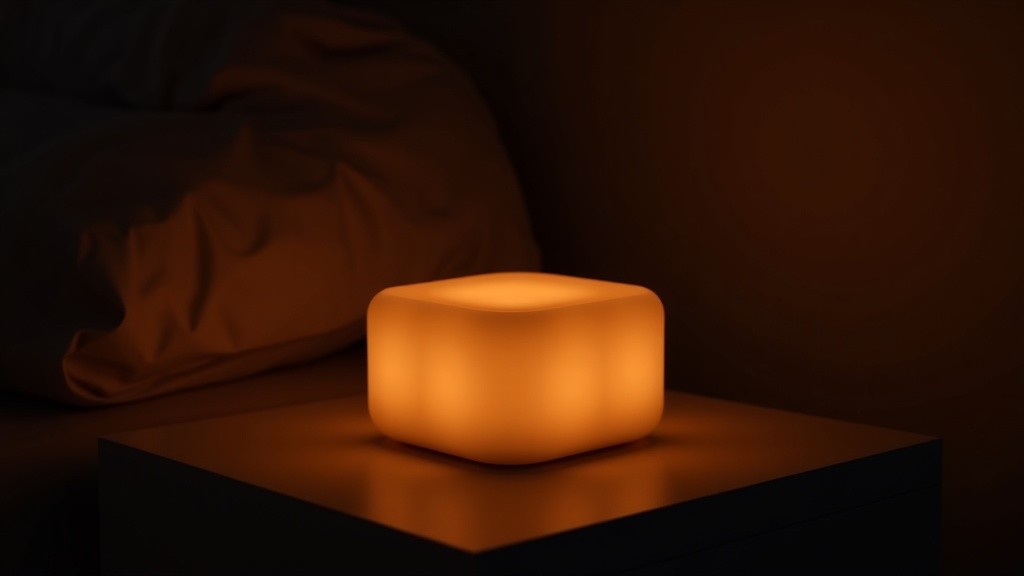
The sleep technology market is worth $100 billion and sells solutions to a problem most products don't actually understand. Here is every major category evaluated through mechanism, not marketing.
The right framework: which part of the sleep regulation system does this address? Sleep is regulated by the circadian system (light-driven biological clock) and the homeostatic system (adenosine-driven sleep pressure). Good sleep technology works with one or both directly. Most consumer devices work with neither.
Sunrise alarm clocks: The mechanism is real — gradually brightening light stimulates ipRGC cells and initiates cortisol release via the SCN, producing a more biologically natural wake. Evidence is moderate. Limitation: addresses wake quality only, not sleep onset or architecture. Single signal.
White noise machines: Acoustic masking reduces disruptive sounds that cause arousals. Evidence is solid for noisy environments. Limitation: auditory cortex habituates to constant, non-varying noise. The masking effect degrades. Natural soundscapes with acoustic variation do not have this problem.
Sleep trackers (Oura, WHOOP, Garmin): Measurement devices, not intervention devices. HRV tracking is the most clinically validated metric. Sleep stage estimation from wrist wearables has meaningful error rates — use for trends, not nightly precision. Oura Ring has the strongest independent validation.
Cooling mattress systems: The mechanism is sound — core body temperature must fall for sleep onset and deep sleep maintenance. Sleeping hot causes fragmented sleep and reduced slow-wave sleep. Evidence is solid. Limitation: addresses temperature only. One signal.
Essential oil diffusers: The mechanism is real. Linalool modulates GABA-A receptor activity and reduces evening cortisol. The delivery is wrong. Standard ultrasonic diffusers produce a bolus that disperses — concentration drops 50–70% within 20 minutes. Clinical trials showing meaningful effects use sustained, controlled inhalation conditions passive diffusers cannot replicate. Full breakdown here.
Multi-modality sleep systems (Eden BioSync): The only category that addresses the integration problem. Light, scent, and sound coordinated on a single timed schedule aligned to circadian phase. Warm-spectrum light drives the SCN-melatonin cascade. Timed scent delivery in the DLMO window hits peak GABA-A receptor sensitivity. Natural soundscape quiets the reticular activating system without habituation. All three signals coherent and simultaneous — which is what the zeitgeber research requires for maximum biological response.
Before purchasing any sleep technology, ask: what mechanism does this address? What is the evidence for that mechanism — not reviews, but research? Does it work with the circadian system or around it? Does it address one signal or multiple? Is it timed to your biology or running on a fixed schedule?
Eden BioSync — Pre-order | Science of Circadian Rhythm | Sleep Optimization Guide







on
Apr 3, 2026
Sleep optimization stripped of supplements and hype — the two systems that control sleep, what actually improves sleep architecture, and the integration problem every single-signal product ignores.
on
Apr 3, 2026
An honest evaluation of every sleep technology category — sunrise alarms, white noise machines, cooling mattresses, diffusers, and multi-modality systems — through the lens of the actual mechanisms.
on
Apr 3, 2026
The neuroscience behind insomnia, circadian rhythm disorders, sleep apnea, and the 3am wake — what is actually happening, and what the evidence says about environmental versus pharmacological approaches.