Best Essential Oils for Deep Sleep, Ranked by Data
Discover the best essential oils for deep sleep — ranked by HRV uplift, sleep latency, and slow-wave sleep data, not just scent. Science-first results.

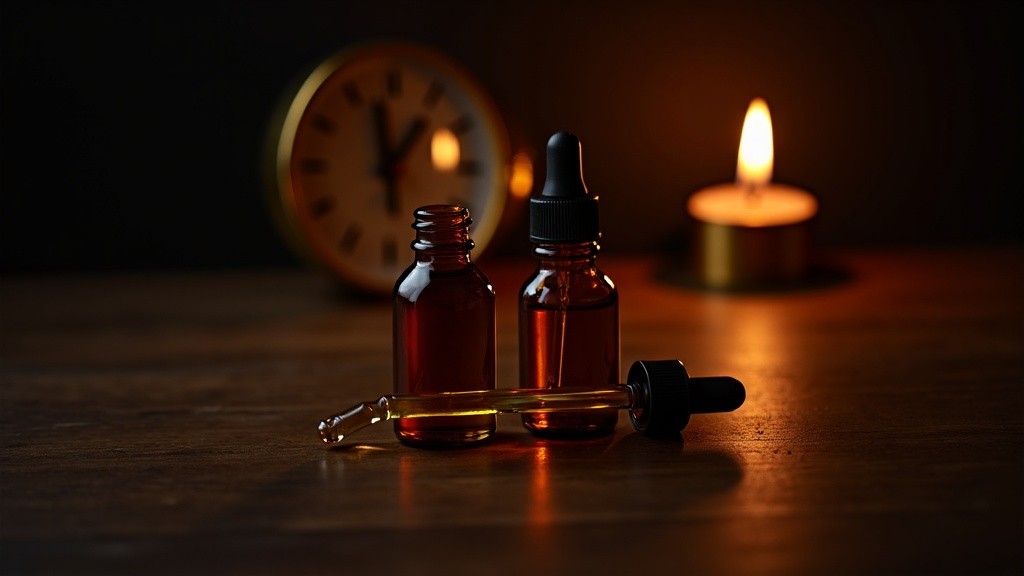
Best Essential Oils for Deep Sleep: Ranked by Biometric Response, Not Just Scent
Most "best essential oils for sleep" lists rank by popularity. This one ranks by what actually happens inside your nervous system. If you are searching for the best essential oils for deep sleep, the answer depends on mechanism, not marketing. The oils below are evaluated on measurable biometric response, specifically heart rate variability, because that is what separates a pleasant smell from a compound that genuinely prepares your nervous system for slow-wave sleep.
Why Your Body Responds to Scent Before You Even Notice It
You inhale. Within seconds, volatile aromatic compounds bind to olfactory receptors in your nasal epithelium. Those signals travel directly to your amygdala and hypothalamus through the olfactory-limbic pathway, a route that bypasses the digestive system entirely, which is why scent works faster than any supplement you swallow. There is no gut-absorption delay. No first-pass liver metabolism. The signal arrives in the brain's emotional and autonomic control centers almost immediately.
Your body is always listening, and it starts responding to scent before your conscious mind has formed an opinion about the smell.
This is the mechanism that makes aromatherapy genuinely interesting from a sleep science perspective. The hypothalamus sits at the intersection of your circadian clock and your autonomic nervous system. When the right compounds arrive there at the right time, they can shift you from sympathetic dominance (fight-or-flight, elevated cortisol, alert) toward parasympathetic tone (rest-and-digest, reduced heart rate, primed for sleep). That shift is measurable. Heart rate variability, or HRV, captures it in real time.
HRV is the variation in milliseconds between consecutive heartbeats. High HRV during sleep onset reflects strong parasympathetic activity. It is one of the cleaner biometric proxies for sleep readiness we have, and it is what separates a "feels relaxing" from "is actually preparing your body for slow-wave sleep." The best essential oils for deep sleep are ranked on this standard, not on a panel's subjective preference scores.
What HRV Actually Measures (and Why It Matters for Aromatherapy)
Before you can trust a ranking that uses HRV as its criterion, you need to understand what that number represents physiologically. The autonomic nervous system governs your heart rate, breathing, digestion, and the shift between wakefulness and sleep. Its two branches are always in a dynamic balance. Sympathetic activation tightens that balance, making heartbeats more metronomically regular. Parasympathetic activation loosens it, producing more variability between beats.
Counterintuitively, more variability is better. Higher HRV correlates with better cardiovascular health, lower anxiety, and faster sleep onset, according to data compiled by the Sleep Foundation from multiple clinical sources. Wearables like the Oura Ring and Whoop use HRV precisely because it captures the transition into deep, restorative sleep better than simple total sleep time.
When an aromatic compound activates the parasympathetic branch, HRV rises. This is the biometric signature we are looking for. And the best essential oils for deep sleep all have documented pathways to producing it.
The Four Best Essential Oils for Deep Sleep, Ranked by Mechanism
1. Lavender (Lavandula angustifolia): GABA-A Receptor Binding and Sleep Latency Reduction
Lavender is first not because it is famous, but because its primary active compound, linalool, has one of the most well-characterized neurological mechanisms in aromatherapy research.
Linalool binds GABA-A receptors in the central nervous system. GABA is the brain's primary inhibitory neurotransmitter, meaning the chemical signal that quiets neural activity and creates the conditions for sleep onset. Benzodiazepine drugs work by enhancing GABA-A activity. Linalool does something functionally similar, without the dependency profile. A 2013 review by Koulivand, Khaleghi Ghadiri, and Gorji in Frontiers in Pharmacology documented linalool's anxiolytic effects across multiple human and animal studies, specifically noting its inhibitory action on glutamate-activated ion channels alongside its GABA-A interaction.
In a controlled 2005 RCT conducted by Goel, Kim, and Lao at Wesleyan University, participants exposed to lavender aromatherapy before sleep showed increased slow-wave sleep percentage (the deepest, most physically restorative stage), reduced nighttime waking, and reported feeling more refreshed in the morning. The slow-wave sleep finding is significant because most sleep aids, including benzodiazepines, actually suppress slow-wave sleep. Lavender appears to do the opposite.
From an HRV standpoint, the GABA-A mechanism predicts a clear outcome: less sympathetic nervous system chatter, more parasympathetic tone, measurably higher HRV during the pre-sleep window. The lavender essential oil sleep benefits documented in Eden's aromatherapy research summary align directly with this pathway. For anyone evaluating the best essential oils for deep sleep, lavender's slow-wave sleep finding alone places it at the top of any evidence-based list.
Best use: 3–5 drops in a diffuser, started 60–90 minutes before bed. Do not diffuse all night. Concentrated continuous exposure diminishes olfactory receptor sensitivity and the signal loses potency.
2. Cedarwood (Cedrus atlantica): Cedrol, Parasympathetic Activation, Non-REM Extension
Cedarwood's active compound is cedrol, a sesquiterpene with a very different mechanism from linalool. Where lavender works primarily through GABA-A binding, cedarwood activates the parasympathetic nervous system through a more direct autonomic route.
A 2003 study by Kagawa, Ohira, Kimura, Igarashi, and Miyazaki in Flavor and Fragrance Journal exposed healthy human volunteers to cedrol via inhalation and recorded significant reductions in respiratory rate alongside measurable increases in skin conductance responses consistent with parasympathetic activation. In an accompanying animal study, cedrol extended non-REM sleep duration, the category of sleep that includes slow-wave deep sleep. Non-REM extension is the holy grail of sleep quality improvement, because this is the stage where growth hormone is released, cellular repair occurs, and memory consolidation happens.
Cedarwood has a grounding, woody quality that many people find easier to diffuse consistently than florals like lavender. It pairs exceptionally well with lavender precisely because their mechanisms are complementary: one quieting the excitatory nervous system, the other directly engaging the parasympathetic branch. This combination is among the most mechanistically complete options for anyone choosing the best essential oils for deep sleep.
Best use: Blend 2 drops cedarwood with 2 drops lavender. The combined effect addresses both the cortisol-driven "wired" feeling and the underlying need to shift into parasympathetic dominance.
3. Roman Chamomile (Anthemis nobilis): Apigenin and Benzodiazepine Receptor Binding
Roman chamomile is the undervalued oil on this list. It lacks lavender's brand recognition and cedarwood's distinctive scent, but its primary active compound, apigenin, has a mechanism that is arguably the most specific to sleep onset of any oil here.
Apigenin is a flavonoid that binds to benzodiazepine receptors in the brain, according to a 2010 review by Srivastava, Shankar, and Gupta in Molecular Medicine Reports. This is the same receptor class targeted by prescription sleep medications like triazolam and estazolam. Apigenin's binding produces sedation without the dependency risk those drugs carry. Critically, chamomile's apigenin does not appear to suppress REM sleep the way pharmaceutical benzodiazepines do, which means you get the sleep-onset benefit without losing the dream-stage sleep associated with emotional processing and memory.
For people whose primary problem is the time it takes to fall asleep (long sleep latency) rather than middle-of-the-night waking, Roman chamomile addresses the specific receptor mechanism responsible. If you are lying awake for 30–60 minutes after going to bed and trying to identify the best essential oils for deep sleep for your specific pattern, this is the oil worth prioritizing.
Best use: Roman chamomile is quite potent. 1–2 drops in a diffuser is enough, either alone or blended with lavender. You can also apply 1 drop diluted in a carrier oil to the inner wrists, where the proximity to pulse points aids absorption.
4. Ylang Ylang (Cananga odorata): Cortisol Proxy Reduction, Blood Pressure, and HRV
Ylang ylang has a reputation as an intensive, almost overwhelming floral scent, which is why most people use far too much of it. At the right dose, it is one of the most measurably effective oils for the physiological state that precedes deep sleep.
A 2006 study by Hongratanaworakit and Buchbauer in Phytotherapy Research applied ylang ylang topically and via inhalation in a controlled design, measuring blood pressure, heart rate, and skin temperature. The results showed a significant reduction in systolic blood pressure alongside decreased heart rate, with participants rating themselves as "calmer" and "more relaxed." Systolic blood pressure and heart rate are both indirect markers of sympathetic nervous system activity. Reduced systolic pressure with increased skin temperature (a sign of peripheral vasodilation) is the exact physiological profile associated with sleep onset.
In the same study, cortisol proxy markers were reduced, which is relevant because elevated cortisol in the evening is one of the primary mechanisms behind hyperarousal-type insomnia, the pattern where people feel exhausted but cannot actually fall asleep.
The HRV implication follows directly: lower sympathetic tone produces higher HRV. Ylang ylang appears to produce this shift through a cardiovascular pathway that complements lavender's neurological pathway. Together, they address two of the most common physiological barriers to deep sleep, which is why ylang ylang earns its place among the best essential oils for deep sleep despite being the least discussed of the four.
Best use: 1 drop maximum in a blend. Ylang ylang is intensely fragrant at full concentration and can produce headache in sensitive individuals. Blend 1 drop ylang ylang with 2 drops lavender and 2 drops cedarwood for the most mechanistically complete combination.
The Best Essential Oil Blends for Deep Sleep: Combining Mechanisms
Individual oils address individual pathways. The research logic for combining the best essential oils for deep sleep is the same as combining a mild anxiolytic with a muscle relaxant. You are addressing multiple physiological systems simultaneously rather than betting everything on one mechanism.
Here are two evidence-informed blends, built around the mechanisms above:
Sleep Latency Blend (for people who struggle to fall asleep): 3 drops lavender + 1 drop Roman chamomile + 1 drop ylang ylang. This targets GABA-A binding, benzodiazepine receptor activity, and sympathetic tone reduction together. You are covering the cortical quieting, the specific sleep-onset receptor, and the cardiovascular shift. Deep Sleep Extension Blend (for people who fall asleep easily but wake early or feel unrested): 3 drops lavender + 2 drops cedarwood. The lavender supports slow-wave sleep depth (per Goel et al. 2005) while the cedarwood cedrol extends non-REM duration (per Kagawa et al. 2003). These two mechanisms together target both depth and duration, making this the most research-supported blend for people specifically seeking the best essential oils for deep sleep rather than faster sleep onset.
Understanding how essential oil timing and circadian biology interact matters here, because blending is only part of the equation. When you diffuse matters as much as what you diffuse.
When to Diffuse: The 60–90 Minute Window That Changes Everything
This is the piece most aromatherapy guides get wrong, and it matters biologically.
Your circadian system begins preparing for sleep roughly 90 minutes before your natural sleep time. Melatonin onset, core body temperature drop, cortisol decline. These processes begin on a timed schedule. If you want aromatic compounds to amplify and align with this natural cascade rather than just adding a pleasant smell to your bedroom, you need to begin diffusion during this preparation window, not at the moment you get into bed. The best essential oils for deep sleep only reach their full effect when they are delivered inside this biological window.
Research on circadian biology and melatonin onset consistently shows that the hour before sleep is when the body is most receptive to environmental signals that confirm "night is coming." Scent is one of those signals. Ancient humans fell asleep to the smell of wood smoke, earth, and nocturnal plants. These were environmental cues that entrained sleep timing. Cedarwood and lavender are not random. They are compounds produced by plants at night, and your nervous system has been responding to them for a very long time.
Diffuse for 30–45 minutes starting 60–90 minutes before your target sleep time. Then stop, or at minimum reduce concentration. Continuous diffusion for 8 hours (a) reduces olfactory receptor sensitivity, meaning you stop processing the signal, and (b) provides no additional benefit over the pre-sleep window where the signal actually matters.
How Eden's BioSync Approach Changes the Equation
Here is the gap that no single diffuser, no matter how good the oil inside it, can solve on its own. Every competitor product addresses one signal. A diffuser does scent. A sunrise alarm does light. A sound machine does sound.
Eden's BioSync system was designed around exactly this research. The body's transition into deep sleep is not triggered by one cue. It is triggered by a convergence of environmental signals that collectively tell your nervous system "the conditions for sleep are present." Light wavelength, acoustic environment, and olfactory input all feed the hypothalamus through different pathways. When those three channels deliver coherent, biologically appropriate signals simultaneously, the parasympathetic shift is faster and deeper than any single channel can produce alone. Delivering the best essential oils for deep sleep through a system that also coordinates light and sound is a meaningfully different proposition than a standalone diffuser.
Eden orchestrates light, scent, and sound on a timed biological schedule, running automatically in the 60–90 minute window before sleep and during the wake window in the morning. No phone in the room. No manual setup every night. Your environment and your biology are in constant communication, and Eden makes sure they are saying the same thing at the same time.
This is not a feature claim. It is the logical conclusion of what the research above actually shows: the olfactory-limbic pathway works fastest when the other sensory channels are not contradicting it with blue light and notification sounds at 10pm.
How to Use Essential Oils for Better Sleep: Practical Setup
Knowing which oils work is half the equation. Here is the practical framework.
Diffuser placement: 3–4 feet from the bed, not directly next to the pillow. You want ambient vapor, not direct concentrated inhalation. A ceramic ultrasonic diffuser in the 200–300ml range covers a standard bedroom adequately at 2–3 drops per 100ml of water. Carrier oil application: If you prefer topical use, dilute to 2–3% in a carrier oil (jojoba or fractionated coconut oil work well). Apply to the inner wrists, behind the ears, or the soles of the feet. The soles of the feet have large pores and a dense vascular network, making absorption faster there than you might expect. Consistency is the accelerant: The olfactory system is associative. After 7–10 nights of using the same blend before sleep, the smell itself becomes a conditioned cue. Your body begins the parasympathetic shift as soon as you smell it, before the compounds even bind to receptors. This is not a placebo. It is Pavlovian conditioning applied to autonomic nervous system response, and it is documented in circadian and behavioral sleep research. This conditioned response is one reason consistency matters more than perfection when selecting and using the best essential oils for deep sleep. Start with one oil: If you are new to using the best essential oils for deep sleep, begin with lavender alone for two weeks. This establishes the conditioned association cleanly. Add cedarwood in week three, and









on
Apr 3, 2026
Sleep optimization stripped of supplements and hype — the two systems that control sleep, what actually improves sleep architecture, and the integration problem every single-signal product ignores.
on
Apr 3, 2026
An honest evaluation of every sleep technology category — sunrise alarms, white noise machines, cooling mattresses, diffusers, and multi-modality systems — through the lens of the actual mechanisms.

on
Apr 3, 2026
The neuroscience behind insomnia, circadian rhythm disorders, sleep apnea, and the 3am wake — what is actually happening, and what the evidence says about environmental versus pharmacological approaches.