Aromatherapy and Sleep Science: What Research Says
The clinical truth about aromatherapy and sleep science — why your diffuser underdelivers and what synchronized scent timing actually does to your brain.

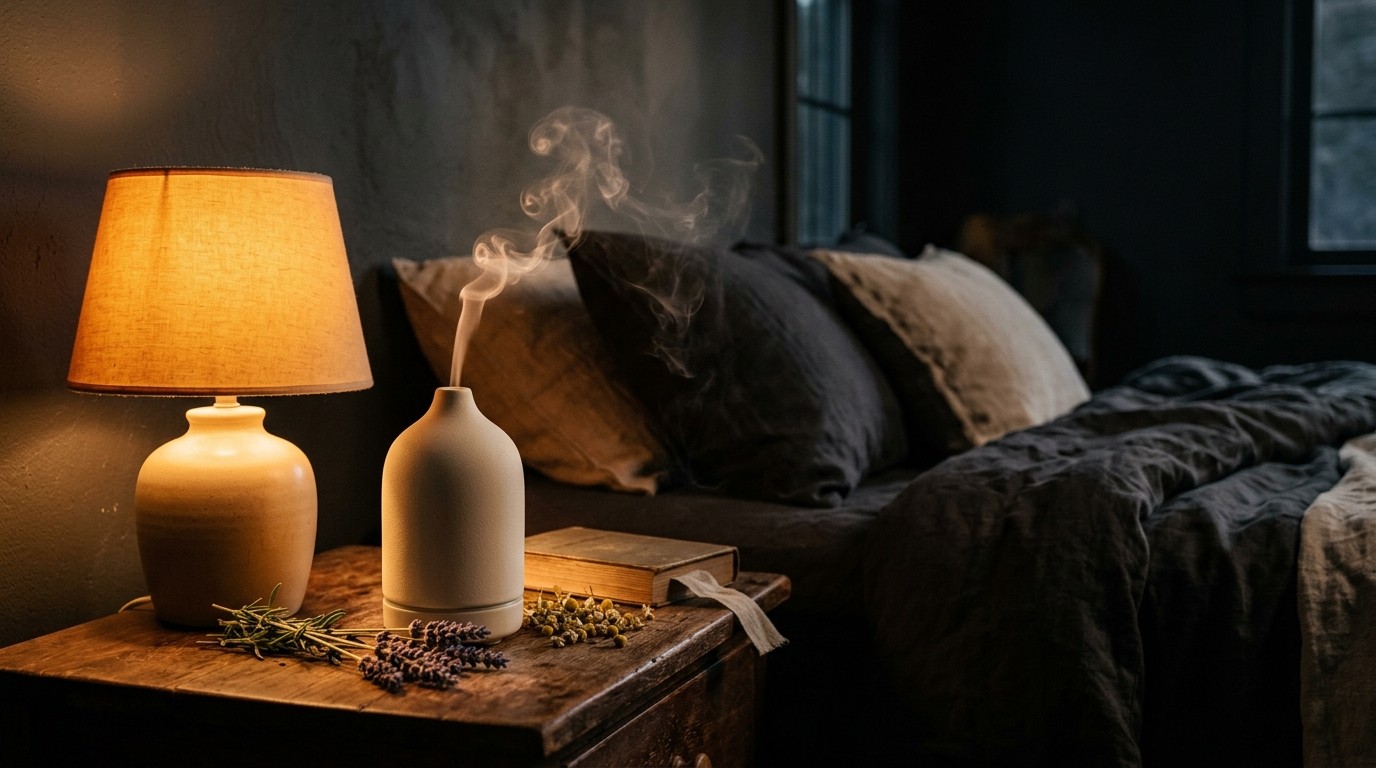
Aromatherapy and Sleep Science: What the Research Actually Says (And Why Your Diffuser Is Only Half the Story)
Most people who try aromatherapy for sleep give up after two weeks — not because the science is wrong, but because the delivery is.
There is genuine, peer-reviewed evidence that inhaled compounds can accelerate sleep onset, deepen slow-wave sleep, and quiet the neural circuits that keep you staring at the ceiling at 2 a.m. Aromatherapy and sleep science, taken together, reveal a gap between what controlled research actually tests and how most of us use essential oils at home. The problem is that the way most of us use aromatherapy — a passive diffuser running somewhere in the corner of the room — bears almost no resemblance to the conditions that produced those results. Your body is always listening, but it needs the right signal, at the right time, in the right dose.
This is the deep dive that the wellness industry hasn't given you yet.
The Olfactory-Sleep Pathway Is Not What You Think It Is
Smell is often treated as the most atmospheric of the senses — pleasant but peripheral. That framing gets the neuroscience exactly backwards.
Every other sense you have routes its signals through the thalamus first — a kind of relay station that filters and forwards information before it reaches the cortex. Smell skips that step entirely. Olfactory receptor neurons in the nasal epithelium connect directly to the olfactory bulb, which has immediate, dense projections into the limbic system: the amygdala, the hippocampus, the entorhinal cortex, and critically, the locus coeruleus.
That last structure is the reason aromatherapy and sleep science intersect so powerfully — and why aromatherapy can do things that other relaxation strategies can't.
The locus coeruleus is the brain's primary norepinephrine hub — the arousal system. When it fires, you feel alert, anxious, vigilant. When it quiets, your nervous system begins the transition toward sleep. The olfactory bulb has direct axonal projections to the locus coeruleus, which means an inhaled compound can begin modulating arousal within seconds of hitting the nasal mucosa. No digestion. No hepatic first-pass metabolism. No waiting for a pill to dissolve.
This pathway also explains why certain smells can surface memories and emotions so viscerally — and why the right scent in the right moment can shift your physiological state in ways that feel almost unreasonably fast. It's not placebo. It's direct anatomy.
What Linalool Actually Does Inside Your Brain
Lavender is the most studied essential oil in sleep research, and the reason it keeps appearing in clinical trials is not tradition — it's chemistry. The dominant active compound in lavender oil is linalool, a monoterpene alcohol with a documented mechanism of action that is anything but vague.
Linalool has been shown to modulate GABA-A receptor activity — the same receptor complex targeted by benzodiazepines and prescription anxiolytics. GABA (gamma-aminobutyric acid) is the central nervous system's primary inhibitory neurotransmitter. When GABA-A receptors are activated, neuronal excitability drops, anxiety decreases, and the physiological preconditions for sleep onset are met. Linalool appears to act as a positive allosteric modulator at this receptor, enhancing the effect of endogenous GABA without the sedative side effects or dependency risks associated with pharmaceutical intervention.
This is not a folk remedy dressed up in molecular language. A 2014 randomized controlled trial by Kasper et al. — published in the International Journal of Psychiatry in Clinical Practice — found that an oral silexan preparation of lavender oil produced significant reductions in anxiety on the Hamilton Anxiety Rating Scale compared to placebo. The study was rigorous and double-blind. But here is the critical detail the aromatherapy and sleep science conversation often misses: the inhaled route reaches the amygdala and locus coeruleus faster than the oral route because it bypasses the gastrointestinal tract and liver entirely. The pharmacokinetics favor inhalation for speed of effect, even if oral administration produces higher systemic concentrations over time.
For pre-sleep use, speed matters. You need a state shift in the 20–40 minute window before you intend to be asleep — not two hours later when a capsule is finally absorbed.
The Polysomnography Evidence: What Happens Inside the Sleep Stages
Subjective reports of sleeping better are easy to generate. Anyone with a warm bath and a good mattress will tell you they slept great. The harder question is whether aromatherapy and sleep science produce measurable, objective changes in sleep architecture — and the polysomnography data is more compelling than most people realize.
A landmark study by Goel et al. examining olfactory stimulation and sleep EEG found that jasmine odor delivered during sleep was associated with reduced sleep movement and increased sleep efficiency compared to controls. More significant for understanding the mechanism: subjects in the jasmine condition performed better on cognitive tasks the following day, consistent with enhanced slow-wave sleep consolidation, the phase during which memory and physical restoration primarily occur.
Other polysomnography-linked findings have examined heart rate variability (HRV) as a proxy for autonomic nervous system state during sleep. Higher HRV during sleep is associated with greater parasympathetic dominance — essentially, a deeper rest state. Studies linking lavender aromatherapy to elevated nighttime HRV suggest that the GABA-A pathway activated by linalool is producing measurable downstream effects in the autonomic nervous system, not just subjective feelings of calm.
Sleep-onset latency — the time it takes to fall asleep — has also shown consistent, if modest, reductions across multiple aromatherapy trials. A systematic review published in the Journal of Alternative and Complementary Medicine found that lavender aromatherapy significantly improved subjective sleep quality and reduced sleep-onset latency across studies, with effect sizes that were clinically meaningful even if not dramatic.
The evidence, taken together, is not ambiguous. Aromatherapy and sleep science confirm that scent influences sleep. The question that almost nobody is asking is whether how you deliver the compound changes the outcome.
It does. Dramatically.
Timing Is a Variable, Not an Afterthought
Here is what the standard aromatherapy and sleep science conversation ignores entirely: your olfactory system does not operate at a constant sensitivity level throughout the day. Its responsiveness is itself governed by circadian biology.
Research in chronobiology — including foundational work following Aschoff's framework on circadian oscillators and their influence on sensory systems — establishes that sensory thresholds, hormonal sensitivity, and receptor responsiveness all fluctuate according to the body's internal clock. Olfactory sensitivity peaks and troughs across the 24-hour cycle. Studies on aromatherapy and circadian rhythm alignment have found that the early evening hours — roughly 90 minutes before habitual sleep time — represent a window of heightened olfactory sensitivity and, critically, heightened responsiveness to GABA-A modulation due to the concurrent rise in endogenous sleep-promoting neurochemistry.
This means that diffusing lavender at 3 p.m. while you work is a fundamentally different biological event than diffusing it at 9:30 p.m. as your body is beginning its descent into sleep. The same molecule. The same concentration. A different circadian context produces a different neurological effect.
Reclaim the sacred windows — because your environment and your biology are in constant communication, and the timing of that conversation is not arbitrary.
The circadian dimension also interacts with light. As your retinal ganglion cells detect the shift from blue-spectrum to warm-spectrum light in the evening, melanopsin signaling to the suprachiasmatic nucleus (the brain's master clock) signals the pineal gland to begin melatonin synthesis. This light-driven hormonal shift primes the GABA-A system for sensitivity to inhibitory input. Combining aromatherapy and light therapy for sleep works precisely because scent delivered concurrent with that light transition lands in a neurological environment that is actively preparing for sleep — far more receptive than the same scent delivered in isolation at random hours.
The Dose-Response Problem With Passive Diffusers
This is the part of the conversation that exposes why most people's aromatherapy practice fails to replicate clinical trial conditions.
Standard ultrasonic diffusers work by dispersing a bolus of scented mist into open air. In a study environment, researchers control airspace, concentration, and duration precisely. In your bedroom, with the door open, a ceiling fan, and the diffuser running from whenever you turned it on until it auto-shuts off, the concentration of linalool reaching your nasal epithelium is largely uncontrolled and rapidly declining.
Inhalation pharmacokinetics research demonstrates that inhaled volatile organic compounds equilibrate quickly in open air environments — concentration at the point of inhalation can drop by 50–70% within 20 minutes of initial diffusion in a standard room, as the compound disperses, adsorbs to surfaces, and degrades. The "burst and fade" profile of a passive diffuser produces a declining dose curve over the very window when you most need consistent delivery.
Clinical trials showing meaningful sleep effects typically use controlled inhalation conditions — masks, controlled airflow chambers, or carefully measured diffusion in small enclosed spaces — that produce a sustained, low-level concentration over the pre-sleep and early sleep period. The dose-response relationship matters. Understanding aromatherapy and sleep science at this level of detail makes clear that a brief high concentration followed by rapid dissipation is not equivalent to a lower, sustained concentration maintained through the first 60–90 minutes of sleep, when slow-wave sleep architecture is being established.
Continuous, timed, low-dose release is not an engineering luxury — it is what the pharmacokinetics of inhaled aromatherapy actually require to produce the effects observed in controlled research.
Why a Single Sense Is Never Enough
The final piece of the scientific argument involves multi-sensory integration, and it explains why even a perfectly timed, perfectly dosed aromatherapy system is still leaving biological signal on the table.
Arousal — the neurophysiological state that prevents sleep onset — is not produced by a single channel. Light keeps you awake partly through melanopsin and partly through cortical arousal driven by visual stimulation. Sound keeps you awake through auditory pathway activation of the reticular activating system. Cognitive stress keeps you awake through prefrontal-amygdala hyperactivity. Any single-channel intervention is working against a multi-channel problem.
The inverse is equally true: research on multi-sensory relaxation shows that concurrent presentation of relaxing stimuli across multiple sensory channels — olfactory, auditory, and visual — produces a lower arousal threshold than any single modality alone. When warm, amber-spectrum light signals your retinal circuits that night has arrived, and natural sounds lower reticular activating system tone, and linalool begins its GABA-A modulation — simultaneously — the combined biological signal is substantially more persuasive than any one of those inputs presented in isolation. This is where aromatherapy and sleep science meet multi-sensory research most directly.
Your brain integrates environmental information constantly. It is not deciding whether to sleep based on one cue; it is performing a weighted sum across all the inputs available to it. An environment that sends a coherent, multi-sensory signal aligned with your circadian phase will always outperform an environment that sends one good signal while the others remain neutral or actively disruptive.
This is why the science points somewhere specific.
What the Evidence Is Actually Pointing Toward
Every competitor product solves one signal. A sunrise alarm does light. A diffuser does scent. A sound machine does sound. The research described in this post — on olfactory-limbic anatomy, linalool pharmacology, polysomnography, circadian timing windows, inhalation pharmacokinetics, and multi-sensory arousal thresholds — is not pointing toward any of those solutions in isolation.
Aromatherapy and sleep science together point toward a system that delivers timed, synchronized, biologically coherent signals across all three channels simultaneously, automatically, on a schedule anchored to your individual circadian phase — without a phone in the room.
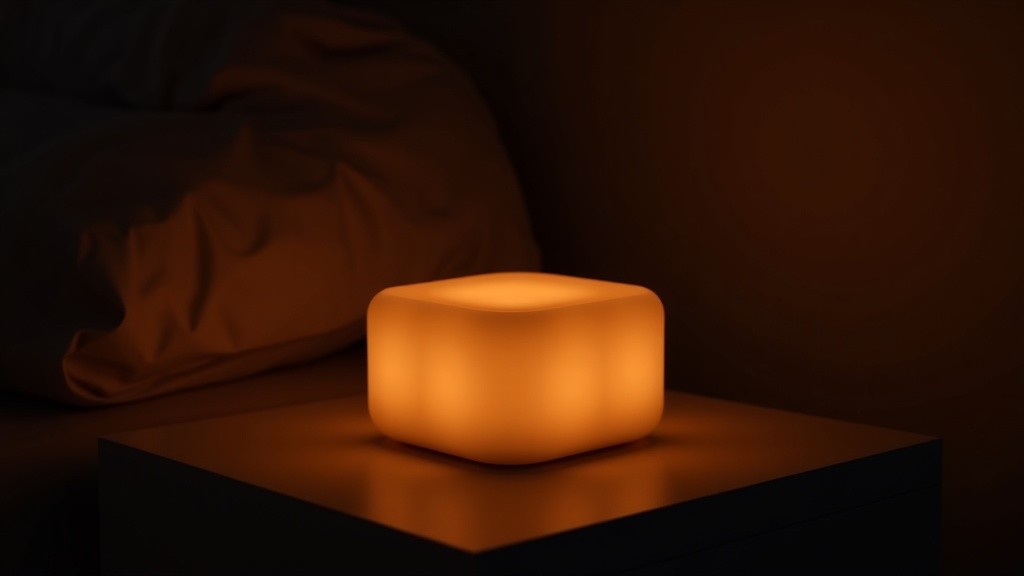
Eden's BioSync is built on exactly that evidence base. Scent delivery is timed and sustained — not a passive bolus, but a precisely calibrated release that maintains the concentration gradient your olfactory epithelium needs through the critical pre-sleep and early-sleep window. Warm-spectrum light dims on a curve that mirrors natural sunset, driving the melanopsin-SCN-melatonin cascade. Sound transitions through frequencies shown to reduce reticular activating system arousal. All three operate on a synchronized biological schedule.
The science doesn't just suggest this approach might work better. The science explains, mechanism by mechanism, why it has to.
Your body is always listening. Return to your natural rhythm — with a system built to speak in biology's own language.
FAQ
Does aromatherapy actually improve sleep quality, or is it placebo?
The placebo question is reasonable, but the mechanism answers it. Linalool — lavender's primary active compound — modulates GABA-A receptors through a documented molecular pathway that is independent of expectation. Double-blind RCTs, including the Kasper et al. 2014 trial, show significant anxiety reduction against placebo. Polysomnography studies demonstrate objective changes in sleep architecture, not just subjective self-report. The effect is real; aromatherapy and sleep science both confirm that the delivery method is what most consumer products fail to replicate from controlled research conditions.
Does it matter when I use essential oils for sleep?
Yes — and this is the most underappreciated variable in aromatherapy practice. Aromatherapy and sleep science together show that circadian biology governs olfactory sensitivity across the 24-hour cycle, and the 60–90 minute window before your habitual sleep time represents a period of heightened responsiveness due to concurrent neurochemical changes. The same compound at the same concentration produces a meaningfully different physiological response depending on circadian phase. Timed delivery — not passive, ambient diffusion — is what the evidence supports.
Why doesn't my diffuser work as well as studies suggest it should?
Almost certainly a dose-response problem. Open-air diffusers produce a rapid concentration spike followed by quick dissipation — sometimes dropping 50–70% within 20 minutes as the compound disperses through the room, adsorbs to surfaces, and degrades. Clinical trials producing meaningful sleep results use controlled inhalation conditions that sustain a consistent, low-level concentration through the pre-sleep and early sleep period. A passive diffuser's "burst and fade" profile does not replicate those conditions, which is why your real-world experience often falls short of what aromatherapy and sleep science research suggests is possible.
Eden was built to close the gap between what the sleep science says and what your bedroom environment actually delivers — starting with scent, orchestrated with light and sound, timed to your biology. Learn more at edenos.io.







on
Apr 3, 2026
Sleep optimization stripped of supplements and hype — the two systems that control sleep, what actually improves sleep architecture, and the integration problem every single-signal product ignores.
on
Apr 3, 2026
An honest evaluation of every sleep technology category — sunrise alarms, white noise machines, cooling mattresses, diffusers, and multi-modality systems — through the lens of the actual mechanisms.

on
Apr 3, 2026
The neuroscience behind insomnia, circadian rhythm disorders, sleep apnea, and the 3am wake — what is actually happening, and what the evidence says about environmental versus pharmacological approaches.